
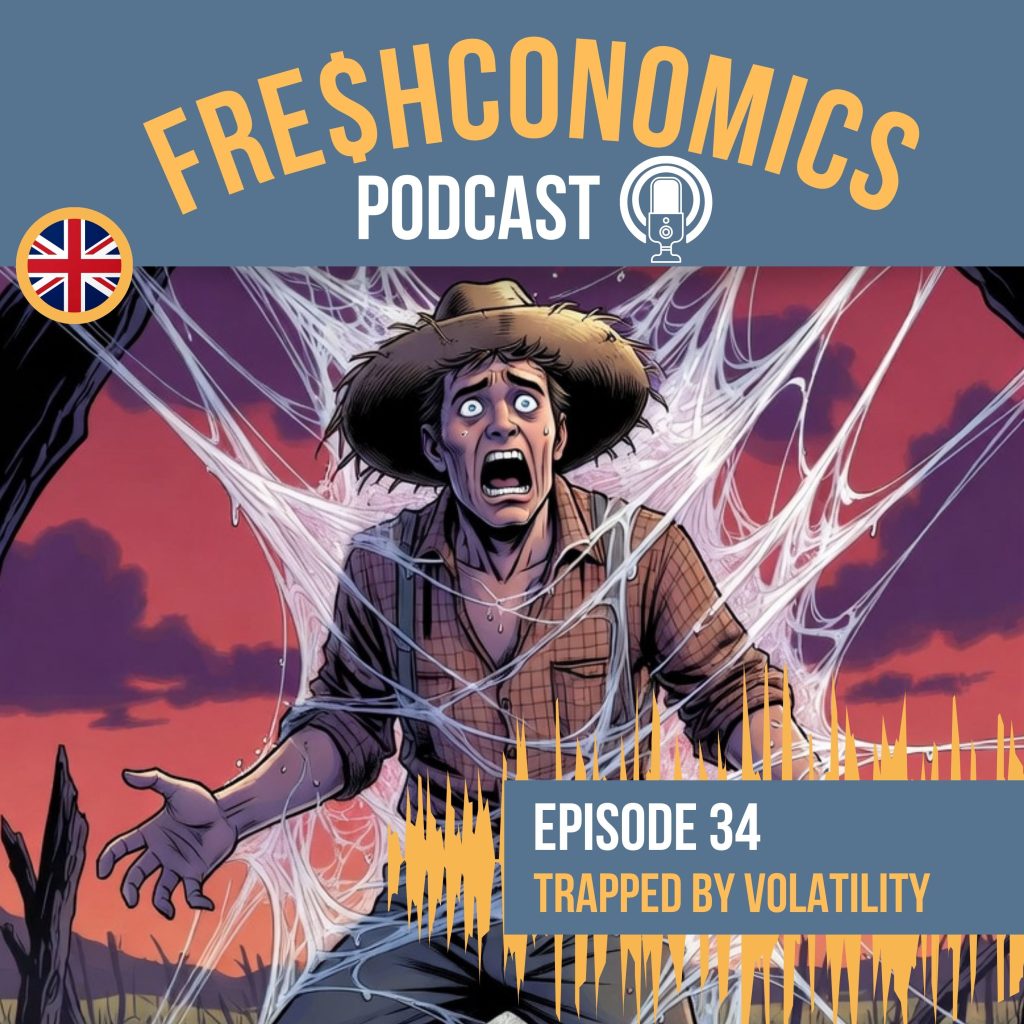
Come with me, in this episode, to a tapas-bar in a small Spanish village. One of those places with a worn-out counter and cured hams hanging from the ceiling. It’s February, it’s cold enough to freeze your ears off, and the early-morning chatter among the local farmers has been the same for weeks.
- “How’s it going, Manolo?”
- “Oh, you know… getting by,” –Manolo replies, mechanically, out of sheer habit. What else is he going to say?
- “Have you seen cucumber prices this morning at the auction? Have you seen what they’re going for?” –asks the man sitting next to him.
- “They’re worth a fortune, man,” –chimes in another regular, his eyes lighting up.
And at that precise moment, Manolo snaps. Our hero has just made a decision that will change his fate.
Manolo has been struggling with tomatoes for three straight seasons. Prices that don’t cover costs, unpaid invoices, a season advance loan he can’t clear, and the mortgage payments on the farm lurking just around the corner.
And now, sipping his coffee, the solution seems crystal clear: “Well, if cucumbers are expensive, then I’d better plant cucumbers.”
Will his gamble pay off? This is the story of a decision that looks perfectly logical, but hides a trap as old as farming itself. A trap economists call the Cobweb Theorem and today we’re going to pick it apart with a little help from physics, psychology, statistics and even a dash of philosophy. Because in the world of fruit and vegetables, what seems obvious can be the fastest road to disaster.
Welcome to a new episode of Freshconomics Podcast.
Enjoy this episode on your favourite platform

📙 And get your copy of the book Freshconomics here: Paperback, Ebook
