
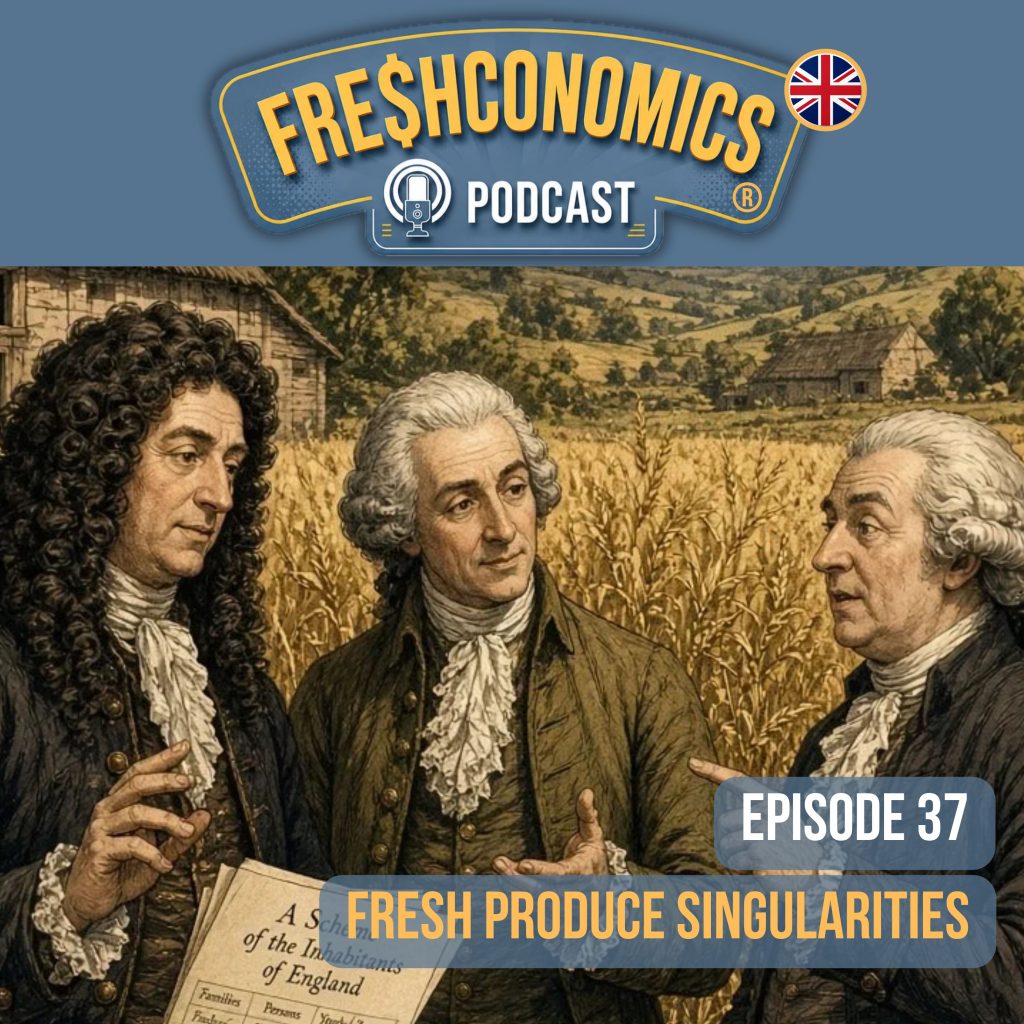
The topic today is about why fresh produce is not a business like any other.
So, I want to start with a sentence that opens the very first chapter of Freshconomics: there was a time when the only economic activity that really mattered was agriculture.
That sentence carries an idea that changed the way I look at this business. The pioneers of the science of economics — those gentlemen of the seventeenth and eighteenth centuries we studied at university, the fathers of the general laws — weren’t describing the economy in general. Initially they were looking at farming. They glimpsed truths that were specific to agriculture and formulated them as if they applied to everything.
At university, I was taught the journey in one direction only: from the general law to the particular case. And I was never able to connect the dots as the pioneers did. Until, reading a popular article by the well-known Spanish economist Ramón Tamames, the penny finally dropped: agriculture is no longer just a particular application of economics.
Agriculture is full of singularities, and those specificities were captured exceptionally well by the people who first spotted them — those pioneers of economic thought. And, as I said, what looks like a special case today was, back then, the general rule.
So today we’re going to do two things. First, try to recover those original foundations. And then go one step further. Because this podcast isn’t about agriculture in general; it’s about fruit and vegetables. And fresh produce is different in its own right, with singularities of its own that set it apart from the agriculture of the big commodities.
I am afraid this episode might be a bit boring. It’s fairly conceptual and there’s no story this time. But I think, any professional of the sector should know the foundations of this business.
Welcome to a new episode of Freshconomics Podcast.
Enjoy this episode on your favourite platform

📙 And get your copy of the book Freshconomics here: Paperback, Ebook
