
I came across Niklas Modig (a professor and researcher at the Stockholm School of Economics) by the TED talk he gave in 2016 in the town of Umeå, in Sweden, which deals broadly with a concept he calls “the Efficiency Paradox”.
After watching the whole video (that lasts almost 20 minutes) I was swept up in a feeling of rediscovery. He managed to explain something complex, something every one of us in management deals with, in a wonderfully simple way.
The concept is the efficiency paradox, and the visual analogy is that of islands of efficiency.
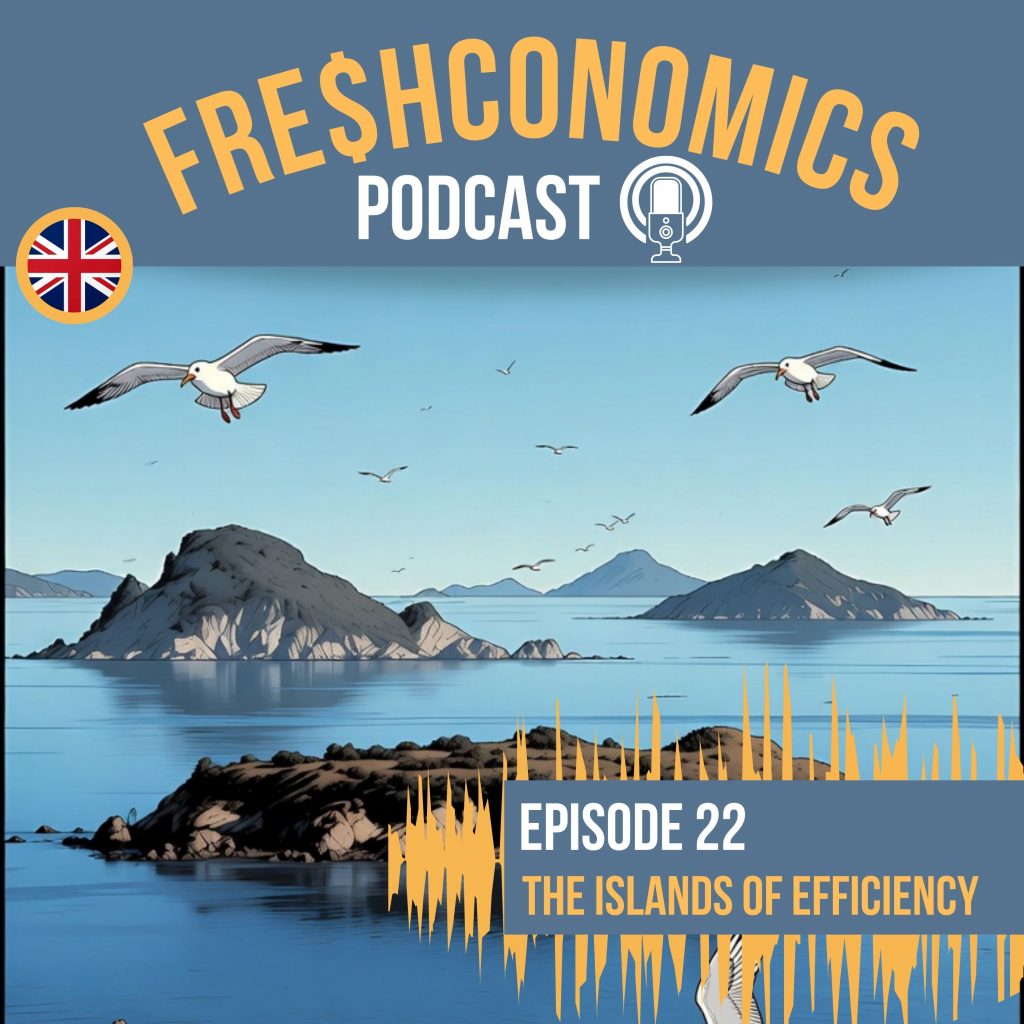
Ever since that rediscovery, it’s a concept I’ve gone on using in my talks, in my articles, and of course in my book. I’ve even borrowed the graphic image this author proposes to illustrate the phenomenon: the image of a group of small islands, all sitting close to one another.
Mr Modig (and the co-author of his book, Mr Åhlström) use the analogy of a group of islands as a powerful visual image of a system that is only nominally connected.
Very often, those of us connected by a business value chain are like a group of islands. We can almost see one another from island to island, yet we operate disconnected from any common logic.
Each island, perfectly formed, with its own ecosystem running like clockwork. But between them, the ocean. A few kilometres of water that make communication, trade and movement difficult. Each island optimises according to its own internal resources; but are they optimised to function together? Not necessarily.
In today’s episode I’m going to try to explain what this efficiency paradox teaches us, and what these islands of efficiency look like when we apply them to our fresh produce world.
Welcome to a new episode of Freshconomics Podcast.
Enjoy this episode on your favourite platform

📙 And get your copy of the book Freshconomics here: Paperback, Ebook
