
There are words we use so often in this business that, by the sheer act of repetition, they end up meaning nothing at all. We pass them around in meetings and on calls as if everyone agreed on what they referred to, and only when someone places a particular example on the table do we realise that each of us was holding a different definition in our head.
“Specialty” is, without a doubt, one of those words. It sounds prestigious, it suggests value, it dresses up presentations and product catalogues. And yet, the moment you press on it, the conversation derails. Nooo, come on, that’s not a specialty! Aaah, but neither is that one!
So what are we actually talking about?
From my point of view, the key is that the concept is dynamic. What was once a specialty is liable to become just another item in the assortment. A phrase I used to enjoy repeating, internally, with my team was: “today’s specialties are tomorrow’s commodities”. (A line I now avoid, because, as you know, I’m convinced we never really work with commodities – but rather with what I’ve called Freshmodities).
Around this concept, in the book Freshconomics, I reveal a methodology for innovation in fruit and vegetable products.
The methodology pivots on a strategic review matrix for fresh produce, which I have, with “great originality”, named the Fresh Produce Strategy Matrix — the FPS Matrix for short. It has been enormously useful to me over the past 2 decades, both in product development decisions and in mapping our competitive position against others.
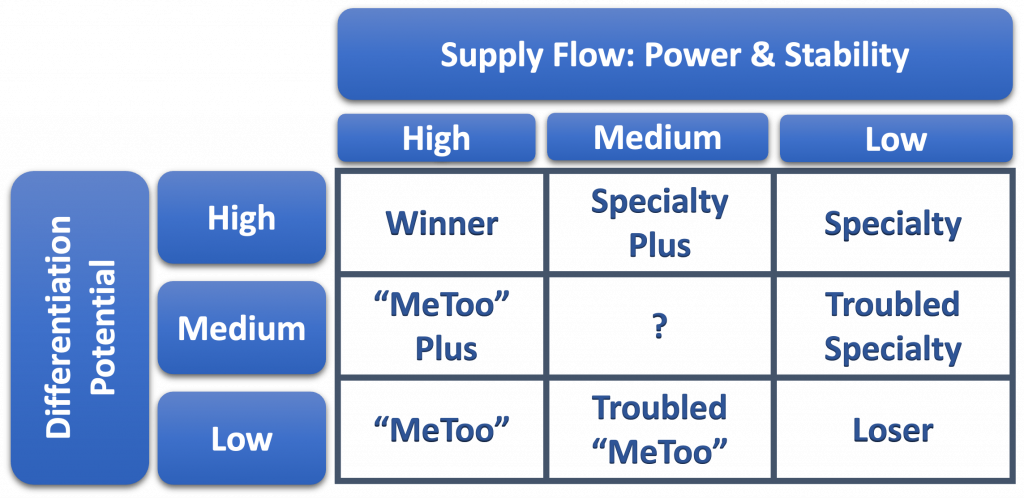
In today’s episode, I want to take that overused word back to the workshop, strip it down, and try to put it back together with a more useful meaning. Because, as we’ll see, what we call a specialty today may well stop being one tomorrow, and confusing the two costs real money.
Welcome to a new episode of Freshconomics Podcast!
Enjoy this episode on your favourite platform

📙 And get your copy of the book Freshconomics here: Paperback, Ebook
